
Armageddon: Why Michael Bay’s Masterpiece Remains the Ultimate 10/10 Cinematic Epic
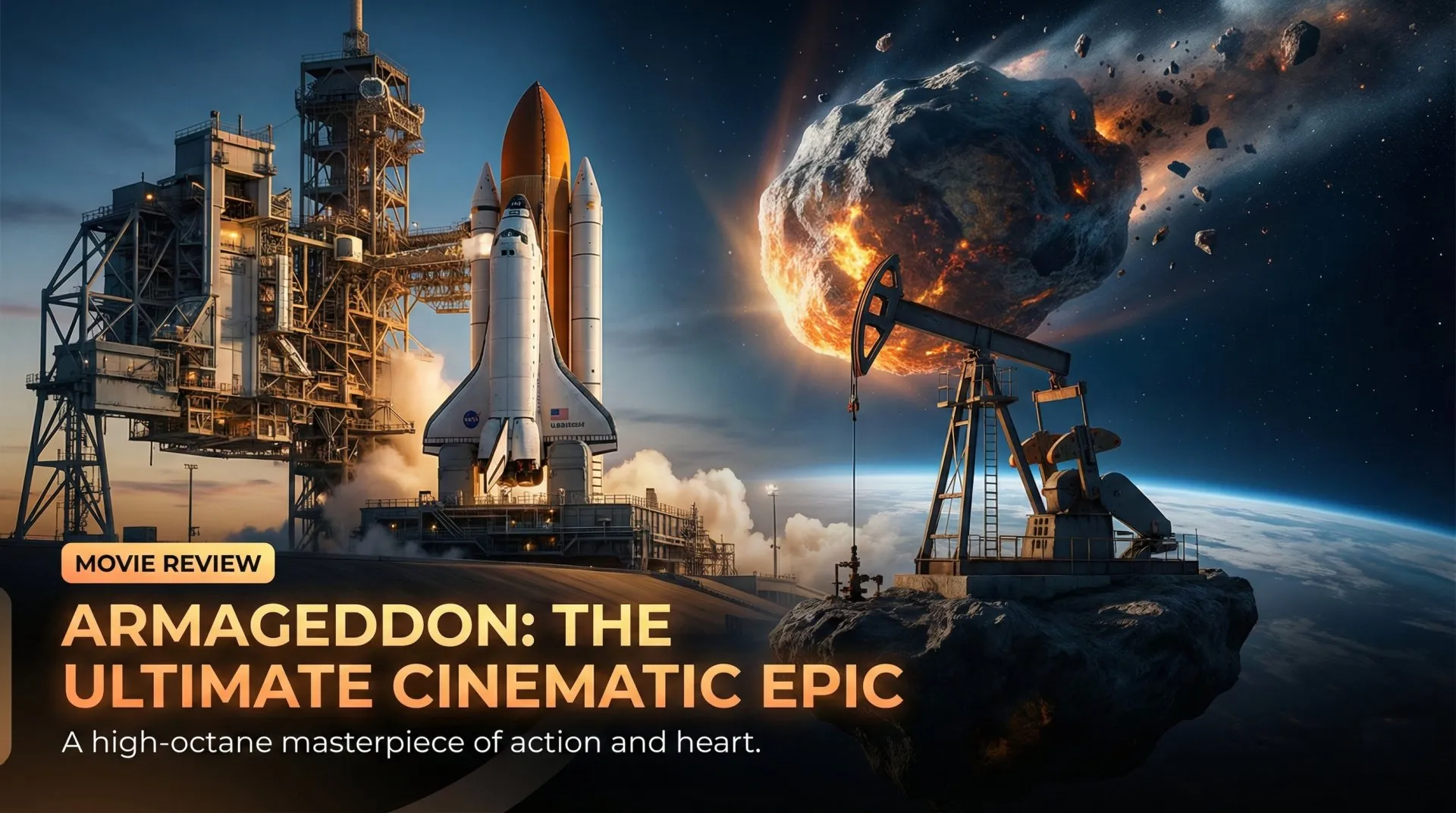
There are movies we watch, and then there are movies we experience. When Armageddon roared into theaters in the summer of 1998, it wasn't just a blockbuster; it was a cultural event. Sitting in a packed theater as the first notes of the score boomed through the speakers, you knew you were witnessing something that would define "The Movies" for a generation.
For us at Dadnology, this film is the definition of perfection. It combines everything we love: grit, technical audacity, men stepping up when the world needs them, and an emotional depth that—even after the 50th viewing—leaves us with a lump in our throats.
Armageddon [Blu-ray]
The 1998 classic in high definition. A mandatory addition to any collection.
![Armageddon [Blu-ray]](/_next/image?url=%2Fplaceholder-guides.webp&w=256&q=75)
1. The Architecture of a Blockbuster: Story and Pacing
The premise is as simple as it is brilliant: An asteroid the size of Texas is on a collision course with Earth. The solution? We don't send astronauts to learn how to drill; we send the world's best deep-core drillers to learn how to fly.
Critics have poked fun at the logic for years, but from a storytelling perspective, it is a masterstroke. It allows Michael Bay to collide two distinct worlds: The sterile, high-tech environment of NASA and the rough-and-tumble, blue-collar world of Harry Stamper’s (Bruce Willis) oil rig crew.
The pacing is relentless. The first 40 minutes are a high-speed chase through an emotional and humorous training montage that makes us fall in love with these misfits. By the time they leave the atmosphere, the stakes aren't just global; they are personal. The friction between Harry, his daughter Grace (Liv Tyler), and the hotshot AJ (Ben Affleck) provides the heartbeat that keeps the CGI from feeling hollow.
2. The Ensemble: A Cast for the Ages
One of the primary reasons Armageddon holds up so well is the casting. There isn't a single weak link in the chain.
- Bruce Willis (Harry Stamper): The ultimate father figure. Tough, uncompromising, but driven by a singular love for his daughter. His screen presence is the anchor.
- Ben Affleck (AJ Frost): The reckless protégé who has to grow up in the span of 18 days. His chemistry with Willis is the engine of the film.
- Steve Buscemi (Rockhound): Provides the perfect "mad genius" comic relief. His antics on the asteroid are legendary.
- Billy Bob Thornton (Dan Truman): He represents the weight of the world back at Houston. He gives the mission its gravity.
This crew doesn't feel like a group of actors; they feel like a family that has spent years in the dirt together. That camaraderie is what makes the final act so devastating.
| Character | Role | The 'Dad' Factor |
|---|---|---|
| Harry Stamper | The Leader / Father | 10/10 - Would do anything for his daughter. |
| AJ Frost | The Protégé | 7/10 - Learning what it means to lead. |
| Dan Truman | The Strategist | 9/10 - Carrying the world's burden. |
| Rockhound | The Wildcard | 4/10 - Brilliant, but zero impulse control. |
3. The Logic of Heroism: Why Story Beats Physics Every Time
Some people like to nitpick the "how" of Armageddon. They want to talk about sound in space or the logic of training drillers to be astronauts instead of the other way around. But here’s the Dadnology truth: Who cares? If we wanted a lecture on astrophysics, we’d watch a documentary. We’re here for the spectacle, the high-stakes drama, and the "Rule of Cool."
Michael Bay isn’t trying to win a Nobel Prize in Physics; he’s trying to win our hearts and blow our minds. The "logic" of the film isn't found in a textbook—it's found in the sweat on Harry Stamper’s brow and the roar of the drill bit hitting the rock. By prioritizing the narrative over the numbers, the film creates a sense of visceral urgency that keeps you on the edge of your seat. It’s about the impossible task, the "zero-to-sixty" stakes, and the sheer audacity of human spirit.
When those shuttles are dodging debris in the asteroid's wake, you aren't checking for gravitational accuracy. You’re holding your breath, hoping the crew makes it through. This is "High-Concept" cinema at its finest—where the emotional payoff is the only variable that matters. In the world of Armageddon, the only law of physics that applies is this: If it feels legendary, it stays in the movie. That’s why we’ve watched it a dozen times, and that’s why it works perfectly every single time.
LEGO Icons NASA Space Shuttle Discovery
For those who want to build their own piece of space history after the credits roll.
4. Visual Mastery: "Bayhem" in Its Purest Form
Michael Bay is often criticized for his style, but in Armageddon, "Bayhem" reached a glorious, early peak. By using actual NASA locations (like the Neutral Buoyancy Lab), collaborating with the military, and relying on massive practical effects, the film has a texture that modern "all-digital" disaster movies lack.
When the shuttles Freedom and Independence launch simultaneously, backed by Trevor Rabin’s heroic brass themes, it is pure cinematic adrenaline. In a home theater setting—especially on a high-end screen with optimized contrast—the colors pop. The deep blacks of space against the searing orange of the shuttle thrusters remain reference-quality material even decades later.
5. The Sonic Signature: From Power Ballads to Tarmac Serenades
You cannot discuss Armageddon without talking about the music—it is the movie’s soul. Of course, there is Aerosmith. "I Don't Want to Miss a Thing" is more than just a song; it’s the film's anthem. Steven Tyler’s raw, soaring vocals playing while his real-life daughter Liv Tyler says goodbye to her father on screen is one of the most effective uses of pop music in cinema history.
But the true "genius" musical moment—the one that every fan remembers—happens right before they board the shuttles. As the crew stands on the tarmac, facing the mission of their lives, AJ starts a spontaneous, soulful rendition of "Leaving on a Jet Plane." Watching these tough, grease-stained guys serenade Grace while the world watches is a masterpiece of character building. It’s funny, it’s bittersweet, and it reminds us that these aren't superheroes; they are just guys who want to come home. It’s the "calm before the storm" that makes you root for them even harder.
Supporting these moments is a score by Trevor Rabin and Harry Gregson-Williams that hits with military precision. The heroic brass themes practically push you into the back of your seat during the launch. It’s an acoustic rollercoaster that moves from the deafening roar of explosions and tarmac singing to the softest, most heart-wrenching piano notes in the finale.
6. The Finale: Why We Cry Every Single Time
Let’s get to the heart of it. Why is this a 10/10 for us? It’s the final video transmission. It’s Harry Stamper shoving AJ into the airlock and making the choice that no father ever wants to make, but every father would make.
The dialogue: "I've always thought of you as a son... and I'd be damn proud to have you marry Grace" followed by his final conversation with his daughter is cinematic gold. Bruce Willis gives the performance of his career here. The tears in his eyes feel real. The grief on Liv Tyler’s face feels real.
In that moment, the movie stops being an action flick and becomes a universal story about sacrifice and legacy. That is why we sit there every single time with tears in our eyes as the credits roll.
Aerosmith - I Don't Want to Miss a Thing (Vinyl)
The legendary soundtrack that defined a generation.
7. The Next Generation: Watching Armageddon with Your Kids
Sharing Armageddon with the next generation is a rite of passage for any movie-loving dad. While the PG-13 rating is there for a reason, watching it with your 12 or 13-year-old is the ultimate bonding experience. It’s that perfect age where they can appreciate the scale of the world ending but really connect with the idea of a father doing anything—literally anything—to ensure his daughter has a future.
I still remember seeing this on the big screen in '98, and now, watching it in my own home theater, the impact is even stronger. It asks the big "Dad" question: What wouldn't you do for your child? It’s not just a disaster movie; it’s a lesson in what it means to be a protector. I'm planning to make this a staple for my kids as soon as they are old enough to handle the intensity—it’s a cinematic milestone they simply have to see.
The Dadnology Verdict
Armageddon is a definitive 10/10. A technical marvel for its era, an acting powerhouse, and an emotional epic that never ages. It is the perfect example of a movie that does exactly what it sets out to do.
Rating: 10/10 - Legendary
Disclaimer: This review and its visuals were created with the help of AI. Some links may be affiliate links – we may earn a commission if you make a purchase, at no extra cost to you.